Airline Transport Professionals
A Prospectus for Flight Training Loan Cosigners
Introduction to ATP
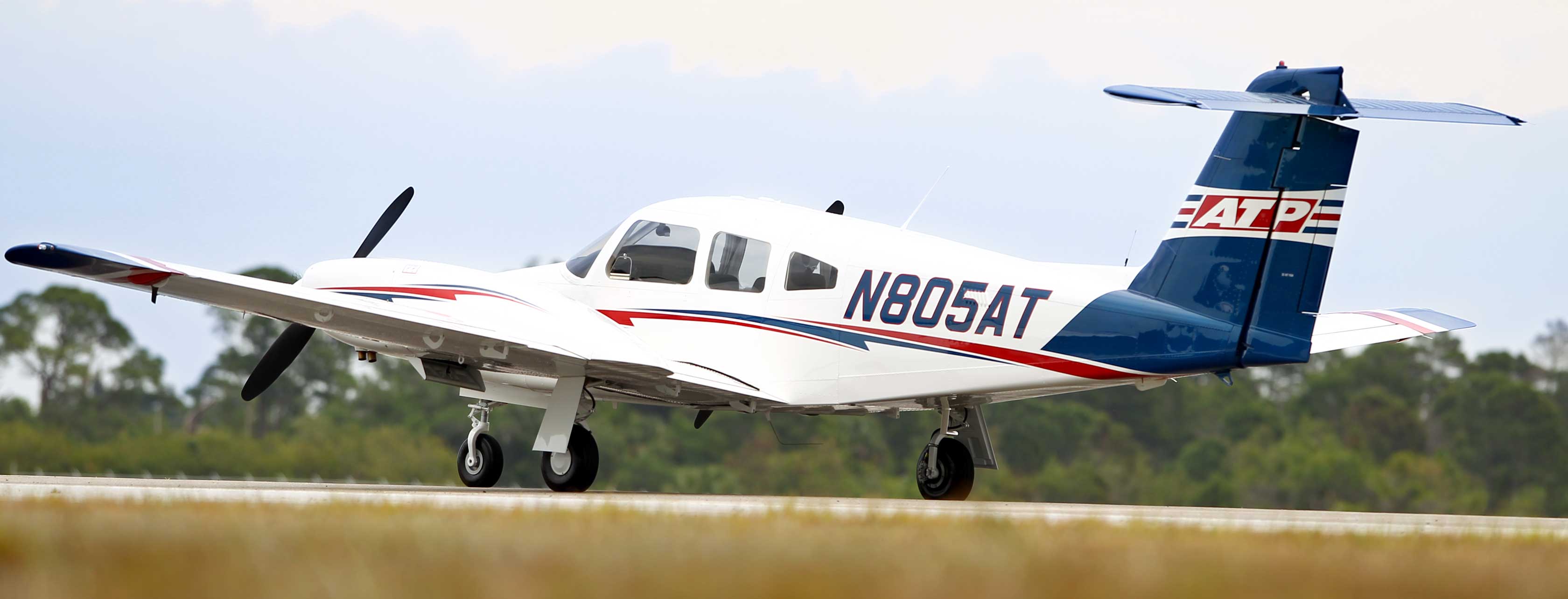
ATP has been training professional pilots since 1984. Today ATP’s management consists of pilots who have flown for major airlines including American Airlines, FedEx, and previously TWA. ATP’s program development team includes active major and regional airline pilots who fly for ExpressJet (United Express, Delta Connection), AirTran and Jet Blue. ATP owns a fleet of 151 aircraft, including 88 multi-engine aircraft, a Citation Jet, and 37 simulators, 5 of which are CRJ-200 Regional Jet simulators. ATP has 26 training centers across the U.S., emphasizing multi-engine, cross-country, crew-concept experience. In addition, ATP’s success over the past 28 years has enabled the company to own–not lease–all of its aircraft and its largest flight training facilities. When it comes to resources, experience, and stability, ATP is unmatched by any other flight training academy.
Growing Demand for Professional Pilots
In early 2010, American Eagle resumed hiring. When American Eagle needed to fill its first new-hire pilot classes, they came to ATP as one of their best sources of qualified pilots. In this open letter, American Eagle's leadership explains the future of airline pilot hiring and why American Eagle recruits ATP Graduates.
The FAA projects the largest increase in passenger volume, on a percentage basis, to occur at regional airlines. The agency believes that the industry will add more than 1,300 jet aircraft with less than 70 seats during the next 12 years, an increase of more than 81%. Few industries demonstrate as quantifiable of a demand for new employees as the regional airline industry.
CNBC coverage of the current pilot shortage sweeping the industry. Watch the Video »
Those knowledgeable about the airline industry recognize that at least three factors will contribute to a pilot shortage within 5 years or less:
- Mandatory Retirements for Pilots Age 65
- Fewer Military Pilots Entering Civilian Workforce as Airline Pilots
- Increasing Qualifications Required of Civilian Pilots
Read more about these factors in "Understanding the Coming Pilot Shortage" and "Age 65 Retirements Begin Soon" on PilotJobs.com. Notice that these factors do not include any industry growth. As the US economy recovers, increasing demand for air travel will cause pilot hiring to accelerate as fast as it ever did during the last pilot shortage just a few years ago.
Boeing reports that airlines in North America alone will need to hire approximately 82,800 pilots over the next 20 years. Commercial airline fleets worldwide will grow to over 39,500 aircraft as they purchase new aircraft to replace their older fleets and capitalize on growth in demand for air travel. The Boeing research report is trusted by more than 100 aviation regulatory agencies worldwide.
Corporate Pilot Jobs
Bombardier, manufacturer of not only the CRJ-series airliners but also the Global Express and other high-end corporate jets, anticipates delivering 26,000 bizjets from 2010 to 2029, and 12,800 regional airliners during the same period. “Despite a continued backdrop of global economic challenges, Bombardier believes the long-term market drivers of growth for the business jet industry remain solid.”
Many pilots look to corporate aviation as an alternative to the most common airline career track. With forecasted deliveries so strong and improving economic conditions, corporate aviation will offer many pilot job opportunities over the next decade. An advantage of gaining commercial pilot certification is that those certificates follow with you to any employer, giving pilots security and flexibility when choosing airline or corporate flying.
Success of ATP Graduates
Traveling around the world, getting to know dozens of different cities, flying a jet at mach .80, and accomplishing a new mission with every flight induces a romance unattainable in other professions.
In order to help our graduates succeed, ATP has formed regional airline hiring alliances that allow us to get our graduates hired faster than those applicants coming to the airlines “off the street” or from other flight schools. Also, by utilizing our Regional Jet simulators (FTDs), ATP pilots are extremely well prepared for both their interviews and initial training at a regional airline.
Pilots can expect to earn over $30,000 during their second year of employment with a regional airline, and during their fourth year of employment, pilots earn over $45,000. Keep in mind that the airline pilot workforce is unionized and pay determined by union-negotiated contracts and seniority. With union protections and a strict seniority system, job security at the established regional and major airlines is excellent, with guaranteed career and earnings advancement. Finally, professional pilots have FAA certificates and credentials that allow many other employment options in corporate aviation. For additional information on airline pilot pay and the regional airline industry, see AirlinePilotCentral.com or ATP’s PilotJobs.com.
Building Qualifications
As the demand for regional airline pilots grows, so too does the demand for flight instructors. Upon completing ATP’s Airline Career Pilot Program, many students build their flight time and experience as a paid flight instructor with ATP prior to their advancement to the airlines. In fact, graduates of ATP's 90-Day Fast Track Airline Career Pilot Program are guaranteed at least 6 months in a paid instructor position upon graduation. Graduates who do not instruct for ATP are consistently able to find other flight instructor jobs with other flight schools. There is tremendous demand for flight instructors graduating from ATP due to their high multi-engine experience. Graduates from other schools can’t even meet multi-engine insurance requirements. Whether instructing at ATP or elsewhere, pay is usually about $1,800 to $2,000 per month during this flight-time and experience-building phase.
A recent pilot hiring poll taken by AIR, Inc. found that at least 92% of pilots hired by Major Airlines held a Four Year Degree. The same poll reported that at least 60% of pilots hired by the Regional Airlines held a Four Year Degree. While these statistics show that a college degree is not required to secure a job with the airlines, it is highly desired and makes you a more competitive candidate for an airline position.
For students who wish to pursue a Bachelor degree in an aviation related field, the FAA certificates and ratings acquired in ATP’s Airline Career Pilot Program will transfer into Mountain State University’s Bachelor of Science in ATP Pilot Operations degree program. This is the most efficient and economical way to earn both FAA certification and a college degree.
Financial Considerations
As a potential cosigner, there are three important facts you should know about ATP’s payment structure:
- ATP receives payments incrementally throughout the program.
- ATP quotes a fixed price.
- Refunds are issued in 15 days or less.
ATP’s multi-disbursement payment structure allows us to determine a student’s ability to be successful in this career early in the program, prior to spending the entire amount of tuition. Unlike other flight training academies, ATP’s program is structured so that ATP is motivated to quickly discontinue those who are unlikely to excel at ATP’s pace. With a fixed-cost pricing structure, ATP does not benefit from having to provide more and more training at an hourly rate—a common tactic found elsewhere.
Loan Details
Students who apply with cosigners generally receive lower interest rates and can finance a larger portion of tuition costs. Essentially, as a cosigner, you agree to pay the student’s loan payments if he or she for some reason does not. Usually a family member or friend will sponsor a student’s airline pilot career financing. Having a cosigner qualifies the student for the following benefits:
- Higher loan amount–up to full tuition.
- Lower interest rate.
- Establishment of good credit history for the student.
You can gain the maximum benefit of having a cosigner on the loan when the cosigner has a 680+ credit score. Applying with a cosigner reduces risk for the lender, therefore these applicants are eligible for rates as low as 2.25%.
Most lenders offer a cosigner release option. After making a certain number of on-time payments, the borrower may request that the lender remove the cosigner from the loan entirely as long as the borrower has sufficient credit individually. After achieving a regional airline pilot job, it may be possible to refinance the loan at a lower rate and without a cosigner.
If a student discontinues training with ATP, the refund will be issued directly back to the lender, not the student. This minimizes interest expense and protects the cosigner. A student may choose to discontinue the program at any time, for any reason.
Additional Benefits for the Cosigner
As a friend or relative of an airline employee, you can often take advantage of airline-employee friend/family benefits, including:
- Free and/or discounted airline travel, including First Class
- Vacation discounts
- Auto-rental discounts
- Hotel discounts
Next Steps
Students should first apply on-line at ATPFlightSchool.com/apply. From within the application, they can send you an email invitation to complete your section of the application. You can choose whether or not to share your information with the student, and all of the information you submit will be kept strictly confidential.
Conclusion
Airline pilot careers were once reserved for highly experienced military aviators or civilian pilots who spent years trying to achieve the high level of flight time that used to be required to find airline employment. With the “1500 Hour Rule” on the horizon, now is the best time for aspiring professional pilots to enter the industry. With ATP's airline-recognized training program and proven curriculum, ATP graduates are the best-trained and most well-equipped in any job market.
Not only will demand for professional pilots continue to grow, but ATP offers the best choice in flight training academies. Nowhere else will you find better aircraft, a more cost and time-efficient program, or a team of professionals more dedicated to training the best professional pilot applicants.
For Additional Information
Please contact:
Eric Priester
Director of Admissions
Airline Transport Professionals (ATP)
800-ALL-ATPS / 800-255-2877
Web: http://www.ATPFlightSchool.com
Email: eric@allatps.com